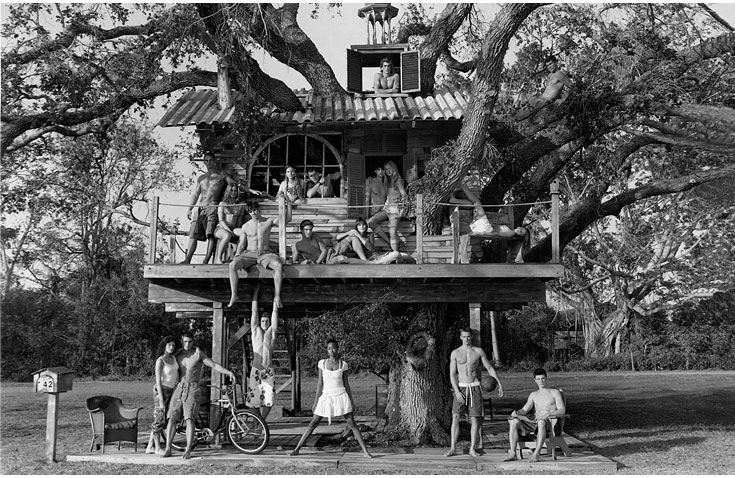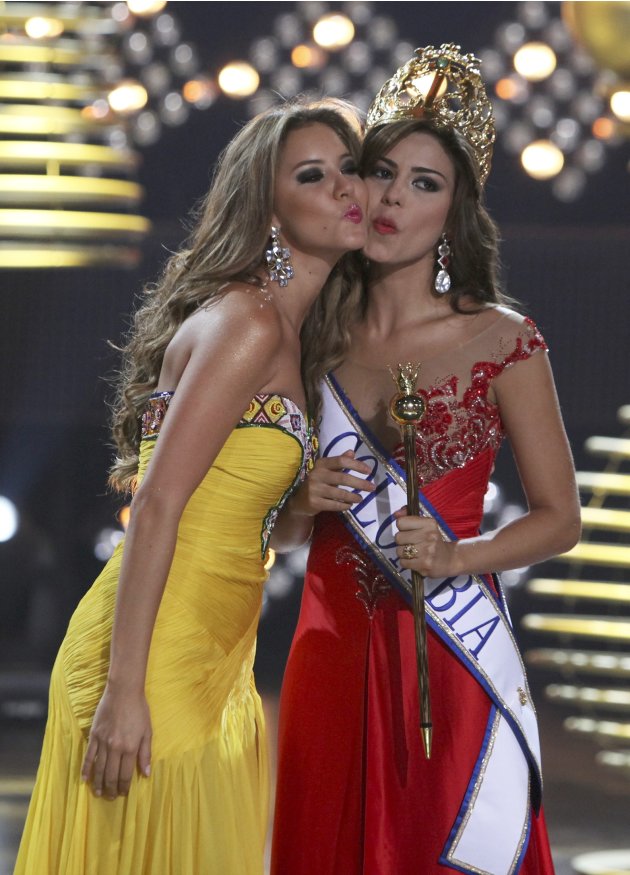
The word "literature" has different meanings depending on who is using it. It could be applied broadly to mean any symbolic record, encompassing everything from images and sculptures to letters.

miércoles, 21 de noviembre de 2012

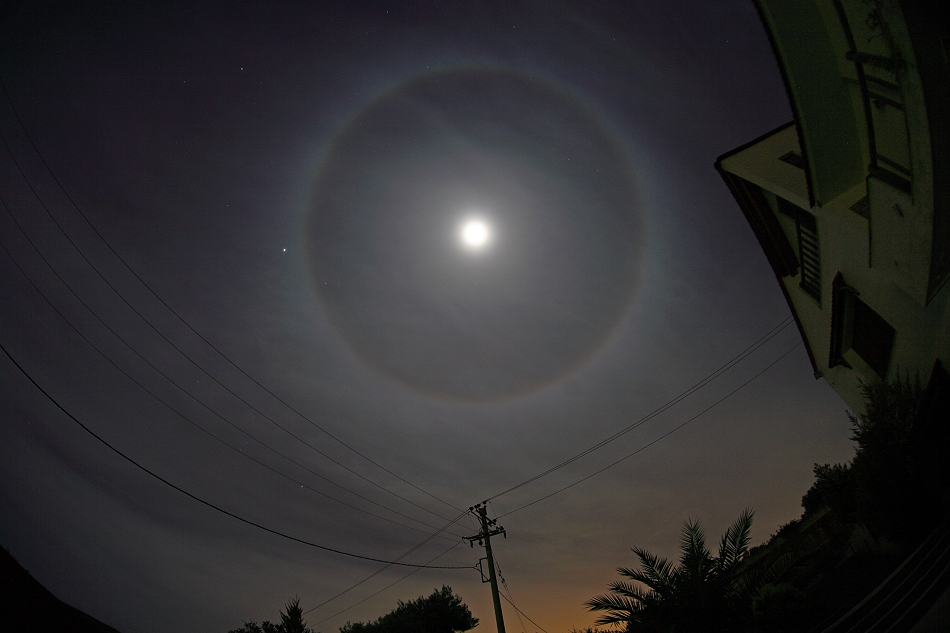
Agenda Cultural @ FIX University "Antares Will Restart on January 22, 2013"

See Explanation.  Clicking on the picture will download 
the highest resolution version available.

More FIX on the NET @ FIX University Cultural Campus

Welcome to Spring Semester 2013

Fernando IX University
Locations of visitors to this page
Fernando IX University


The Best College Radio Stations


Undergraduate Study at the Institute of Astronomy


Undergraduate Study at the Institute of Astronomy

The Choice:

Part II Astrophysics or Part II + Part III Astrophysics?

Students usually enter Part II Astrophysics on completion of Part IB in either Mathematics or Physics. Those going on to Part III Astrophysics have normally taken Part II Astrophysics. There is a possibility of changing to Part III Astrophysics from Part II Mathematics or Part II Physics. There is no restriction on entry for Part II Astrophysics, but the number of Part III places is limited to about 20 by the number of potential projects (and project supervisors) available. Preference is given to students who have taken Part II Astrophysics.
It is not necessary for students to decide on whether to apply to go on to take Part III Astrophysics at the time they begin the Part II course. However, from 2012 a II.1 in an appropriate Part II will be required for entry to Part III.
All students who proceed to Part III Astrophysics are generally required to complete at least one of the CATAM computer projects organized by the Mathematics Faculty. The computer project work may either be taken for examination credit during the year (in lieu of the extended essay) or, alternatively, completed during the long vacation following completion of Part II. A grade of at least a Beta for the project is required for admission to the Part III course.

Part II Astrophysics: Course Content

The syllabus includes eight lecture courses split between the Michaelmas and Lent terms. These lecture courses come in two flavours: those which teach the fundamental physics underlying the rest of the course - viz, Relativity, Principles of Quantum Mechanics, Statistical Physics, Astrophysical Fluid Dynamics, and those which apply these concepts to particular astronomical subject areas viz, Topics in Astrophysics, Physical Cosmology, Stellar Dynamics and Structure of Galaxies and Structure and Evolution of Stars.
In the Michaelmas Term one of the courses (Topics in Contemporary Astrophysics) plays the dual role of introducing students to a range of exciting topics in contemporary astrophysics, while developing abilities in physical reasoning and order of magnitude estimates in an astronomical context. The other courses consist of foundation courses in Relativity (at the Cavendish Laboratory), Principles of Quantum Mechanics (at the Maths Department) and Physical Cosmology at the IoA. In the Lent Term there are four courses: Astrophysical Fluid Dynamics, Stellar Dynamics and Structure of Galaxies and Structure and Evolution of Stars (at the IoA) and Statistical Physics (at the Maths Department).
The style throughout requires minimal memorizing of descriptive terminology, and avoids the simple quoting and application of complicated formulae. Rather, lecturers will concentrate on the derivations of fundamentals from first principles, and the teaching of basic understanding.
There is also an examinable coursework component (comprising about 1/8 of the marks) for which students have two options: an extended essay (selected from a list of titles on contemporary research issues, announced in the Michaelmas term) or else the completion of typically two of the CATAM computer projects organized by the Mathematics Faculty, and which include astrophysical options. The projects are aimed at enabling students with a research career in mind to develop the necessary ability to solve various problems by numerical means. Note that although students may freely choose which option to take, any students proceeding to Part III Astrophysics will be required to demonstrate the necessary computing skills, normally by completing at least one CATAM computing project, before commencing Part III; thus any such students who chose the essay as examinable work will need to complete a CATAM project over the summer.

Part III Astrophysics

This course leads to a MSci. degree and is mainly intended as preparation for graduate studies in astrophysics, although the high level of mathematical rigour means that graduates are also highly attractive to employers in other sectors. Lecture courses are taken mainly from the wide selection of astrophysics courses taught, often by Institute of Astronomy staff, as part of the Part III Mathematics and from two courses offered in Part III Physics. Students normally take four lecture courses for examination although they often attend a wider range of lectures for interest.
Although most of those taking Part III Astrophysics will have taken Part II Astrophysics, the fact that most Part III Astrophysics and Part III Mathematics lectures (and examinations) are the same, means that for interested Part II Mathematics students of sufficient standard, Part III Astrophysics is an alternative to Part III Mathematics. The main difference is that Part III Astrophysics students take one less lecture course (and examination), but undertake a more substantial project, instead of the Essay. It is also possible in principle, for mathematically able students who have taken Part II Physics to take Part III Astrophysics (at the discretion of their Director of Studies and of the IoA), provided they have taken the Lent Term option in Astrophysical Fluid Dynamics. Students contemplating the route from either Part II Maths or Part II Physics into Part III Astrophysics should be aware that, in the case of over-subscription, priority will be given to suitably qualified students who have done Part II Astrophysics.
Astrophysics courses currently offered in Part III Mathematics (these change from year to year) include Astrophysical Fluid Dynamics, Astrophysical Dynamics, Structure and Evolution of Stars, Galaxies, General Relativity, Black Holes, Cosmology and Planetary System Dynamics .
Further details of the courses may be found at the Faculty of Mathematics. Examinations are the same as those taken by students taking Part III Mathematics.
Part III Astrophysics students may also offer the Part III Physics courses "The Physics of the Earth as a Planet" and "Particle Astrophysics". Further details of the courses may be found at the Department of Physics. Examinations are the same as those taken by students taking Part III Physics.
A major component of the Part III Astrophysics course is the research project (accounting for one third of the marks) which is supervised by staff at the IoA over the Michaelmas and Lent Terms. This provides undergraduates with a unique opportunity to get to the cutting edge of astronomical research and the resulting dissertation often contains work of publishable quality. Projects often either involve the analysis of astronomical data or the running of computer simulations. In addition, students develop their communications skills through giving an oral presentation on their project.
All Part II students who proceed to Part III Astrophysics, who offered an extended essay for examination in lieu of computer projects organized by the Mathematical Faculty, must submit (no later than 1 September prior to commencing Part III Astrophysics) a project of at least 8 units from a selection provided by the IoA CATAM advisor; viz projects from sections 14 and 23 i.e., either 14.1, 14.6, 23.4, or 23.8. in respect of 2010−2011 “Mathematical Tripos Part II, Computational Projects 2010/2011”. Copy can be obtained from the Course Secretary, if necessary.

Frequently Asked Questions

How mathematical is the Part II Astrophysics course - would the average physicist cope?

The Part II Astrophysics course is somewhat more mathematical than Part II Physics and thus may involve some adjustment by students from a physics background during the first term of the course. Nevertheless we find that some of our most mathematically rigorous courses are among the most popular and successful courses for students from all backgrounds.

Mathematicians and physicists entering Part II Astrophysics have different skills and have done different courses in Part IB - so how does this work?

Both mathematicians and physicists will meet both familiar and unfamiliar material. For example mathematicians may be familiar with some of the topics covered in the Astrophysical Fluid Dynamics course and physicists will likewise have met some material in the Statistical Physics course. The differences in approach of mathematics and physics students are addressed in supervisions: physicists learn greater confidence with mathematics whilst mathematicians are encouraged to develop more physically intuitive ways of looking at problems. In practice, the differences between former mathematicians and former Nat. Scis. are much less pronounced by the end of the year.

Will I learn less fundamental physics than in Part II/Part III physics?

The key thing here is that you will learn different physics (with some overlap, of course) with the physics emphasised being that which is most relevant to astronomical rather than terrestrial contexts. Thus you'll learn considerably more dynamics but considerably less about solid state physics than in the physics course.

Do I restrict my options by doing Part II Astrophysics?

Inevitably, yes: any specialisation closes some doors and opens others. In practice this means that any student contemplating postgraduate research in another branch of physics (such as condensed matter) should remain in the Physics Tripos.

Are there any practicals or opportunities to use telescopes?

There is currently no practical component of the course, although we review this issue regularly in consultation with the students. The IoA however houses a number of telescopes, including the historic Northumberland and Thorrowgood telescopes, and students are encouraged to join CUAS, who provide training in the use of these telescopes as well as organising a programme of entertaining astronomical lectures.

How difficult is the Part II course?

Part II Astrophysics should not be regarded as a soft option and it is found to be challenging to mathematicians and physicists alike. On the other hand, students on average advance a class in Tripos between their Part I and Part II Astrophysics result, suggesting that the majority of students rise to this challenge. More dramatic changes in class (e.g. III -> I) are not unknown, as students are inspired by the course content and rediscover their scientific curiosity. Due to the small class size, exams are not marked to conform to a standard mark distribution which therefore varies greatly from year to year according to the enthusiasms and abilities of the student cohort.

How difficult is the Part III course?

The taught component of Part III Astrophysics derives from Part III Maths and so one should not underestimate the pace and mathematical rigour of the course. On the other hand, our selection procedure for this course means that the students who go on to Part III Astrophysics appear to be well equipped for the course, judging by their Part III results (to date the great majority have obtained 2.1s and Firsts).

Can I study astrophysics within the Mathematics and Physics Triposes?

The answer is yes in both cases. For mathematicians there are two Part II courses covering astrophysical topics (Cosmology and General Relativity), with the wide range of topics at the Part III level. Physicists take a Relativity course in the Michaelmas Term and can opt to take the IoA's Astrophysical Fluid Dynamics course as a Lent Term option (both these courses being shared with Part II Astrophysics). In Part III Physics, students may take a major option and some minor options in Part III that are astronomically related, as well as having the opportunity to do some astronomically related project work, although this is less extended than the project work component of Part III Astrophysics. The breadth and depth of astrophysical courses offered in Part III Physics is in general less than in Part III Astrophysics (or Mathematics), but, as a trade-off, students obtain a better grounding in non-astronomically related physics at the Part II level.

Can I make non-standard transitions between Mathematics and Astrophysics and Physics at the Part III level?

Maybe, but this is a matter for discussion with your Director of Studies and the departments involved. In general, transitions between Mathematics and Astrophysics at the Part II to Part III level are straightforward in either direction for qualified students. Transfers between Physics and Astrophysics after three years are now possible for suitably qualified students who have taken the Astrophysical Fluid Dynamics option in the Lent Term of Part II Physics. In addition, such students will be expected to complete a CATAM computing project over the summer. Those wishing to transfer into Astrophysics at the Part III level should note that, in the case of over-subscription, priority will be given to those coming from Part II Astrophysics. Transfers between Part II Astrophysics and Part III Physics are not encouraged.

What do people do after Part II and Part III Astrophysics?

The destinations of Astrophysics graduates after Cambridge are very varied. Many have proceeded to PhDs in astronomy; in recent years, most of our students taking this path have taken the Part III Astrophysics course, which is regarded as an elite qualification by astronomy departments both in Cambridge and elsewhere in the U.K. A number of students have also gone on to acquire a range of (non astronomy related) further qualifications that build on the solid mathematical skills acquired in Part II Astrophysics. Astrophysics degrees also equip graduates for a range of non academic jobs, including teaching, software development, financial services and accountancy. Our graduates include investment bankers, business analysts, workers in the media and a vicar. In the words of an alumnus from 1996/1997 "....having 'Astrophysics Cambridge' on one's CV certainly opens a lot of doors!"

Finally....

We end with some quotes made by our Part II students over the last decade, which we selected from many in a similarly enthusiastic vein:
" The course was fantastic and more than lived up to my expectations, and the IoA is a really cool place" .
" ..Though hard at times, I'm very glad I chose to study this as my third year option and have really enjoyed the course content and also the atmosphere of the department: the friendliness and relaxed atmosphere have made it even more enjoyable"
"I think I cannot praise it much higher than to say that if the rest of my time at Cambridge had been like this year than I might not be leaving. I think the course is a credit to the people involved with it....I have enjoyed it and had my interest re-ignited, something I feared had been killed off for good"
"...now doing a PhD in Astrophysics. The Institute provided me with the academic background I needed. It also provided me with great inspiration and motivation"
"Very enjoyable, challenging but manageable thanks to the support of the staff and lecturers. The environment is really nice at the department and I would definitely recommend the course in the future!"

...and on Part III

"Department is great. Very welcoming. Completely comprehensive access to facilities. Often attended seminars and colloquia. The staff are all very approachable and keen to help if they can"
"I think the IoA staff and facilities are amazing. It was very easy to see people and I really felt welcomed into the department. It is a lovely environment to work in and if anything was going to convince me into further study it would have been the people and atmosphere at the IoA."
"I have had a wonderful year and thoroughly enjoyed the course."
"A very enjoyable course and well-organised."
"Really nice course ... ... My most enjoyable year from works point of view."

Fernando Noveno University
Department of Art & Art History
RecStay Cultural Campus
Cali (v) Colombia, South America
© 2008 The Board of Trustees of the
Fernando Noveno University. All Rights Reserved


Texto original


martes, 20 de noviembre de 2012

Hello World "Merry Christmas" Starts Early Around The World... From FIX


trussel.comChristmas Island. photo by Franco Salmoiraghi,
623 × 812 - 128 k - jpg

hawaiibassfishing.comMy 4 pound Christmas Island bonefish. A school of giant Manta Rays inside ...
640 × 480 - 69 k - jpg

flickr.comChristmas Island red crab, Christmas Island, Australia
500 × 357 - 153 k - jpg

dailytelegraph.com.auChristmas Island. Opposition immigration spokesman Scott Morrison's column ...
650 × 366 - 54 k - jpg

allposters.esAerial View of Christmas Island, Kiribati Lámina fotográfica
400 × 300 - 35 k - jpg

tourismuptodate.blogsp...These crabs dominate most areas of Christmas Island, beach, road, ...
550 × 413 - 76 k - jpg

jamescusick.co.ukThe population of Christmas Island is growing and the children are educated ...
400 × 300 - 34 k - jpg

oregonflyfishingblog.comThis is a newer lodge on Christmas Island. Ikari House has a great staff, ...
500 × 376 - 99 k - jpg

worldatlas.commap of christmas island, christmas island maps
286 × 285 - 11 k - gif

indexmundi.comFlag of Christmas Island Flag description: territorial flag; ...
604 × 302 - 13 k - gif

tourismnewsinfo.comFishing In Clear Water Christmas Island
550 × 367 - 64 k - jpg

marcostampscorner.blog...Christmas Island - Marine Life
400 × 353 - 53 k - jpg

tripadvisor.com.auSun Princess at Christmas Island (Deeyoung, Mar 2010)
550 × 412 - 32 k - jpg

anglingdirectholidays.comThe one and only beautiful Christmas Island, pure remote bliss for some ...
432 × 247 - 125 k - jpg

eol.jsc.nasa.govKiritimati, Kiribati (Christmas Island) Click here to view full image (247 ...
1748 × 1389 - 247 k - jpg

allposters.com.arWaves, Pacific Ocean, Christmas Island, Australia Premium Poster
400 × 300 - 25 k - jpg

adamsethfox.blogspot.comChristmas Island Red Crab Swarms
600 × 396 - 81 k - jpg

en.wikipedia.orgFile:Christmas Island Australia 76-fr.png
1462 × 1322 - 366 k - png

janeresture.comChristmas Island has been almost continuously occupied only since 1882, ...
360 × 270 - 16 k - jpg

australiangeographic.c...Each year, millions of red crabs traverse Christmas Island on ther perilous ...
620 × 413 - 408 k - jpg

More FIX on the NET @ FIX University Cultural Campus

Welcome to Spring Semester 2013

Fernando IX University
Locations of visitors to this page
Fernando IX University

The Best College Radio Stations


Introduction to Genetics and Evolution

Mohamed Noor

A whirlwind introduction to evolution and genetics, from basic principles to current applications, including how disease genes are mapped and how we leverage evolutionary concepts to aid humanity.
This week we will continue to look at issues of population genetics. These are the class materials we'll work with this week.Problem Set: This week is the sixth graded problem set: Population Genetics Problem Set, Week 7.
This assignment should be completed at least once before the Nov. 26th, 12:00 pm EDT deadline. Please read the grading policy (if you haven't already done so) before completing the problem set, to better understand the requirements for the course.

There is also a set of practice problems available. The download links for the problems and their solutions is available to the right of lecture #6 in week 7. These problems are not graded nor are they required for understanding the assigned problem set. They are purely for the benefit of students that wish to have additional material to work through and check their understanding of the class topics.

Don't forget to check your graded problem set from Week 6, also in the wiki page for Problem Sets and Exams! Also, please post in the Problem Set Week 6 forum if you got a correct answer for one of the problems, in the threads provided (the "How Did You Correctly Solve..." series), so that all students can see the line of thinking that reached a correct answer!

Lecture: Natural selection: Fundamentals

  • Darwin and Wallace emphases
  • Reiterate-- mathematical inevitability & 3 conditions
  • Simulating selection at a single locus
    • Dominance matters
    • Concept of “relative fitness”
    • Effects on genotype and allele frequencies
Lecture: Natural selection: Types at single loci

  • Directional selection
    • Different types, vary with dominance
    • Leads to loss of one allele eventually
  • Heterozygote advantage (overdominance)
    • Alleles maintained at predictable equilibrium frequency
  • Heterozygote disadvantage (underdominance)
    • “Unstable” equilibrium
      • Alleles will probably be lost in real population
  • Negative frequency dependent selection
    • Selection changes based on frequency of alleles
    • Alleles maintained at predictable equilibrium frequency
  • Lecture: Natural selection: Types acting on traits

    • Directional selection (not to be confused with single-locus version)
      • Changes mean phenotype of population
    • Stabilizing selection
      • No change in mean phenotype, but loss of variance
    • Disruptive selection
      • No change in mean phenotype, but increase in variance
    • Final thoughts-- Fisher’s fundamental theorem of natural selection
      • Selection reduces variation in fitness
      • Rate of increase in fitness is proportional to the genetic variance in fitness
    Lecture: Sampling error over single generations

    • Larger samples maintain representation
      • Larger population sizes more constant in allele frequencies
    • In one generation, alleles about equally likely to increase or decrease in frequency
      • Unlikely to stay at “exactly” same frequency
    • Average change in allele frequency = (pq)/2N
    Lecture: Sampling error over multiple generations

    • In long term, drift always leads to fixation or loss of alleles variable at a locus eventually
    • Probability of eventual fixation equals allele frequency
      • Probability of eventual loss equals one minus allele frequency
    • Same principle for multiple populations-- average across many stays same
    • If drift is strong, can overpower selection and make somewhat bad allele fix
    Lecture: Rate of neutral molecular evolution

    • If mutations arise at a roughly constant rate, can predict
    • Probability of mutation arising in large population size directly cancels with probability of fixation so rate of arising & fixing of neutral mutations is independent of population size
    • If have mutation rate, can estimate time to common ancestor
      • Must divide by two (since mutations arise in both lineages)
      • Sample calculations
  • Introduce neutralist vs selectionist views of variation
  • Optional Suggested Readings:

    • Evolutionary Analysis, 4/e, Freeman & Herron, pages 182-207, 232-241, 346-350
    • Introduction to Genetic Analysis, 10/e Griffiths et al, pages 661-666

    viernes, 16 de noviembre de 2012

    Jeremy Adelman & A History of the World since 1300 @ FIX University Cultural Campus


    Fernando IX University
     

    Doctor of Philosophy in English

    Fernando IX University

    A History of the World since 1300

    Jeremy Adelman

    This course will examine the ways in which the world has grown more integrated yet more divided over the past 700 years.
    Fernando IX University
    Dear FIX,

    Last night I made mistake when I corrected the alignment of the current Assignment to the Lectures. To be clear: If you are tackling the 4th assignment in World History there was a mistake in the posting within the A, B or C options (not the main question posting). The essay you write should be based on lectures 9-12 (not 5-8 as originally indicated or 13-16 as I mistakenly emailed).

    Follow these instructions:

    Current Assignment

    The current assignment is Assignment 4, which is for Lectures 9-12. Choose one of the following three questions to answer, then scroll down to the bottom of the page to select the blue assignment button and begin working:

    Option A - Explain and evaluate how the industrial revolution changed global commerce.
    Option B - How did the Qing, Ottoman, Mughal and Russian dynasties respond to nineteenth-century transformations?
    Option C - What roles do prophets play in world history?

    Whether you are writing an assignment, evaluating an assignment, or checking your results, please remember to select the same Option that corresponds to your selected question.

    Just so you know, Assignment 5 will include questions about the period roughly from 1890 to 1945, and Assignment 6 will cover the period from 1945 to the present. We are going through the assignment postings now to make sure that the information for the next two assignments are correct.


    Apologies for the confusion.

    Jeremy Adelman & A History of the World since 1300 Course Staff

    More FIX on the NET @ FIX University Cultural Campus

    jueves, 15 de noviembre de 2012

    Agenda Cultural @ FIX University Campus newsRus.com


    Click on the slide!
    Visión pictórica en exposición
    Una visión diversa de lo social y cultural de la región hará un colectivo de pintores que participará en la exposición “Mirando al Valle a través del arte” que será inaugurada en la Biblioteca Departamental Jorge Garcés Borrero. Desde el taller del reconocido maestro Mario Gordillo, 18 artistas buscan con sus obras brindarle a la comunidad otro espacio del conocimiento, el desarrollo humano y el goce personal de la gran diversidad étnica y cultural de la región, dijo Juliana Garcés Saroli, directora de la Biblioteca Departamental. Agregó que en la exposición colectiva participarán los artistas Jairo Usma; Roberto Molano, Jorge Montealegre, Uldarico Minotta, María Esperanza Londoño, Cristina Cruz, Rosalina Vanegas, Elvira Andrade, Ana Julia Velazco, Mariluz Mejía, Socorro Lora, Nohora Piedrahita, Elsy Herrera, Aracelly Melo, Olga Marín, Virginia Aristizábal y el maestro Mario Gordillo. La exposición Mirando al Valle a través del arte estará abierta desde el 16 de noviembre hasta el 16 de diciembre con ingreso libre para el público.

    Fernando IX University

    Julio Nava se suma al pacto vallecaucano y realizará concierto en la Plazoleta de San Francisco

    El próximo 23 de noviembre a las 10 del día, Julio Nava, ofrecerá un concierto gratis en la plazoleta de San Francisco, durante los actos simbólicos con los que se hace lanzamiento del Pacto de la Vallecaucanidad que promueve el Gobierno Departamental, a través de su Mandatario Ubeimar Delgado.
    Bajo el lema “porque el futuro del Valle es hoy”, el Pacto de la Vallecaucanidad, busca recuperar confianza, recuperar la credibilidad, generar sentido de pertenencia y posicionar al Departamento en el contexto nacional.
    Julio Nava, decidió sumarse a esta iniciativa que se viene adelantando a distintos niveles y esferas del país, concitando la unión de fuerzas.
    Nava asegura que “es momento de cambiar el chip de los vallecaucanos, con acciones encaminadas a reencontrar ese liderazgo característico de la gente de esta región, además de continuar transmitiendo a las futuras generaciones ese sentido de pertenencia por el territorio que los ha acogido y los ha visto crecer”.
    Por esta razón Julio Nava, estará presente en la tarima principal, ofreciendo a su público completamente gratis, canciones como ‘Maldita flor’; ‘No se me acaba la sed’; ‘Si fueras lunático’; ‘No sé por qué?’; ‘tú’, entre otras. Además que deleitará al público interpretando el himno del Valle del Cauca.
    El cantante ha sido uno de los principales replicadores de esta campaña que se oye en todos los rincones de la región y que cada día tiene más seguidores en todos los sectores de la sociedad vallecaucana.
    *

    Hoy, lanzamiento del libro

    ”Historia, memoria y patrimonio mueble en Santiago de Cali”

    Universidad Fernando Noveno

    Este jueves 15 de noviembre se llevará a cabo el lanzamiento del libro ‘Historia, Memoria y Patrimonio Mueble en Santiago de Cali’, de los autores Carmen Cecilia Muñoz Burbano, Carlos Mario Recio Blanco y Erika de la Fuente Romero. La presentación tendrá lugar en el salón Madera del Centro Cultural de Cali, con la conferencia del profesor Francisco Ramírez Potes, de la Universidad del Valle. Se realizará a las 5:00 de la tarde. Este libro presenta una investigación y recopilación histórica del patrimonio mueble de Cali, en una publicación de dos tomos, en la cual, el lector podrá encontrar la historia de los bienes de interés cultural, el legado del pasado, el equipaje del presente y la herencia para las futuras generaciones. “Con un valor añadido que es el tema de la historia de las instituciones que conservan ese patrimonio, además se hace una valoración a los bienes de interés cultural”, dijo Carlos Mario Recio Blanco, uno de los tres autores del libro y coordinador del Archivo Histórico de Cali. Añadió que esta obra es de importancia para la ciudad de Cali, porque es un inventario de interés cultural y de bien mueble, por el cual el ciudadano se puede identificar en un espacio geográfico específico y con lugares artísticos, culturales y educativos de la ciudad. La invitación es para la comunidad caleña para que participe en el lanzamiento del libro ‘Historia, Memoria y Patrimonio Mueble en Santiago de Cali’. Se recuerda que se realizará este jueves, a partir de las 5:00 de la tarde, en el salón Madera del Centro Cultural de Cali, carrera 5 # 6–05. Esta publicación tiene el apoyo de la Secretaría de Cultura y Turismo de Cali y la Alcaldía Municipal, con la participación de docentes de la Universidad del Valle.
    Fernando IX University
    Fernando IX University
    Fernando IX University
    Fernando IX University Fernando IX University Fernando IX University Fernando IX University *
    Fernando IX University Fernando IX University
    *
    Fernando IX University
    Fernando IX University
    Fernando IX University Fernando IX University Fernando IX University

    More FIX on the NET @ FIX University Cultural Campus

    Welcome to Spring Semester 2013

    Fernando IX University
    Locations of visitors to this page
    Fernando IX University

    The Best College Radio Stations


    newsrus.blogspot.comAgenda Cultural @ FIX University Campus newsRus.com
    751 × 995 - 110 k - jpg

    recstay101.blogspot.comPhotograph on Tublr.com FIX University Cultural Campus by newsRus.com ...
    300 × 447 - 104 k - jpg

    masterofteachingarts.b...... Estudio Takeshima @ FIX University Cultural Campus newsRus.com
    500 × 387 - 163 k - jpg

    masterofteachingarts.b...newsRus.com Agenda Cultural @ FIX University Campus
    600 × 400 - 90 k - jpg

    fix101.blogspot.comPhotograph on Tublr.com FIX University Cultural Campus by newsRus.com ...
    757 × 1600 - 238 k - jpg

    fix101.blogspot.comPhotograph on Tublr.com FIX University Cultural Campus by newsRus.com ...
    600 × 444 - 280 k - jpg

    fix101.blogspot.comPhotograph on Tublr.com FIX University Cultural Campus by newsRus.com ...
    500 × 330 - 36 k - jpg

    archivesfix.blogspot.comarchives: Agenda Cultural @ FIX University newsRus.com Film Fest 2012
    801 × 604 - 38 k - jpg

    feriacali.blogspot.com... del Libro /: Agenda Cultural @ FIX University newsRus.com Film Fest 2012
    600 × 400 - 84 k

    paginadeanamariagomes....... Ana Olema Hernández @ Frontera Sur | FIX University Campus Cultural
    1600 × 1344 - 201 k - jpg

    paginadeanamariagomes....... de Cine de Cali @ FIX University Cultural Campus newsRus.com
    480 × 360 - 21 k - jpg

    fix101.blogspot.comPhotograph on Tublr.com FIX University Cultural Campus by newsRus.com ...
    519 × 796 - 43 k - jpg

    campuscultural.blogspo...Agenda Cultural @ Cultural Campus: Agenda Cultural newsRus.com @ FIX ...
    962 × 539 - 87 k - jpg

    campuscultural.blogspo...More FIX on the NET @ FIX University Cultural Campus
    800 × 1136 - 117 k - jpg

    fix101.blogspot.comMore FIX on the NET @ FIX University Cultural Campus
    1236 × 1422 - 331 k - jpg

    fix101.blogspot.comFIX University "a place for independent study": Agenda Cultural @ FIX ...
    932 × 716 - 138 k - jpg

    campuscultural.blogspo...Agenda Cultural @ Cultural Campus: Agenda Cultural newsRus.com @ FIX ...
    205 × 262 - 13 k - jpg

    wallstreetfix.blogspot...Agenda Cultural @ FIX University Campus newsRus.com. Dear FIX,
    634 × 459 - 96 k

    fixshops.blogspot.comCampus Shops @ FIX University: Agenda Cultural @ FIX University Campus ...
    448 × 301 - 61 k

    masterofteachingarts.b...FIX University @ newsRus.com · Master of Science in Computer Science
    600 × 425 - 77 k - jpg

    Archivo del blog